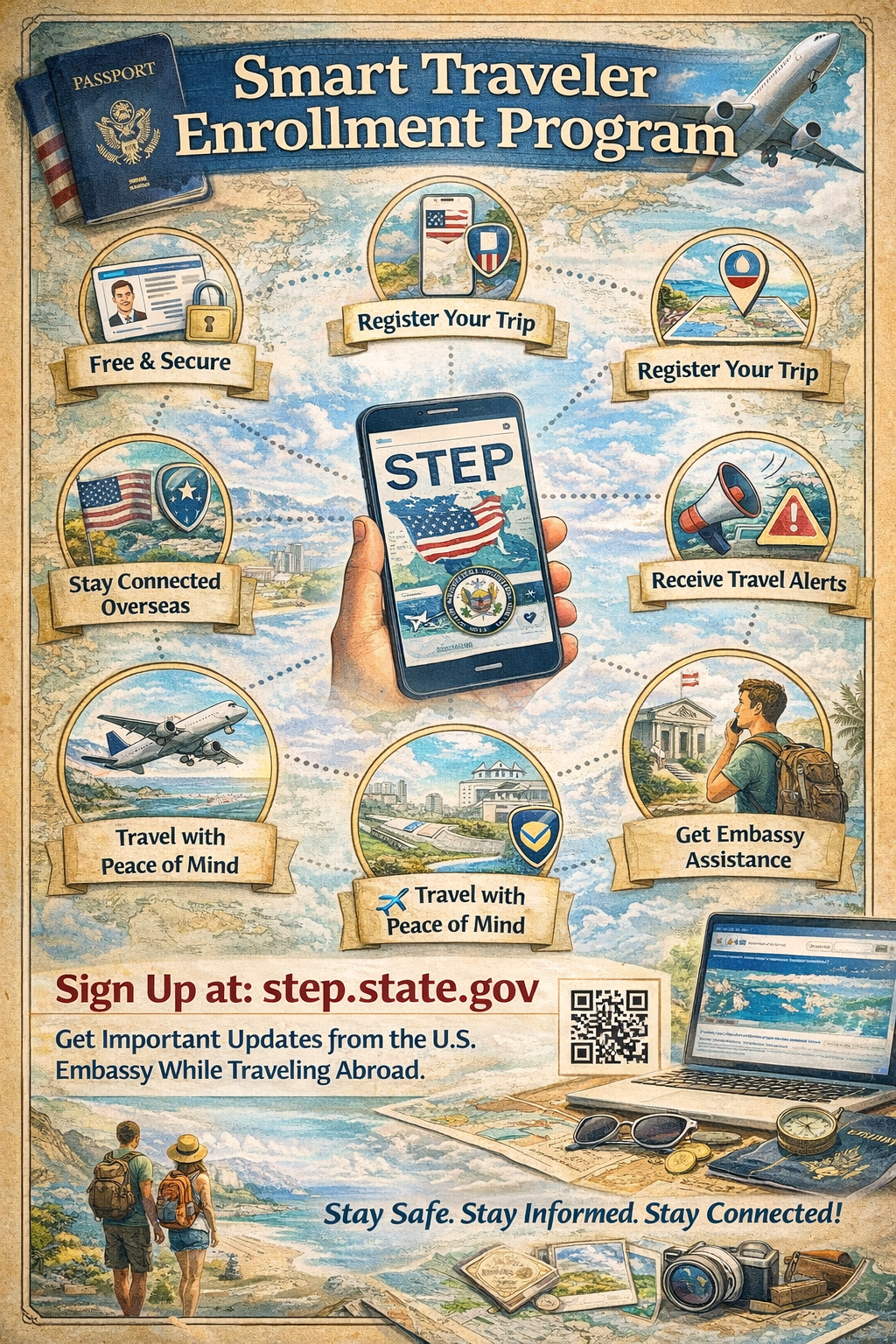
Smart Traveler Enrollment Program (STEP) — The 2026 Definitive Guide
📍 Last updated: February 1, 2026
Featured Snippet (Answer Box Target)
The Smart Traveler Enrollment Program (STEP) is a free service from the U.S. Department of State that lets U.S. citizens and nationals register their international travel with the nearest U.S. embassy or consulate. Enrolling gives you destination-specific safety alerts, helps embassies contact you or your emergency contacts in a crisis, and improves travel safety and situational awareness.
What Is the Smart Traveler Enrollment Program (STEP)?
The Smart Traveler Enrollment Program (STEP) is a voluntary service offered by the U.S. Department of State’s Bureau of Consular Affairs that allows U.S. citizens and nationals to register their travel plans or residence abroad with the nearest U.S. embassy or consulate. STEP sends official email updates, alerts, and travel advisories while you’re abroad, and makes it easier for government authorities to contact you in emergencies.
Key facts about STEP:
-
It’s entirely free and open to U.S. citizens and nationals.
-
You receive country-specific safety advisories and embassy updates via email.
-
STEP assists with emergency communication and evacuation coordination.
Why STEP Matters (And When It’s Most Useful)
Travel conditions can change rapidly — from natural disasters and health outbreaks to political unrest. STEP helps you stay informed with official alerts tailored to your destination, giving you the right information at the right time.
Where STEP really adds value:
-
During natural disasters or civil unrest
-
When evacuation or shelter-in-place instructions are issued
-
For safety updates related to health, security, or travel infrastructure
STEP complements general travel insurance and advisory information — it doesn’t replace either, but it improves situational awareness and communication channels during crises.
Who Should Enroll in STEP
STEP is beneficial for almost all U.S. travelers, including:
-
Tourists and vacationers visiting foreign countries
-
Business travelers on short or extended international trips
-
Students studying abroad or participating in exchange programs
-
Expats and long-term residents living outside the U.S.
Even if your destination seems low-risk, enrolling provides additional safety monitoring from the U.S. government.
How the Smart Traveler Enrollment Program Works
Here’s a clear, step-by-step breakdown:
-
Visit the official STEP website at
step.state.gov(government portal). -
Create an account using Login.gov — this ensures your data is secure.
-
Enter your trip details: destination, dates, emergency contacts.
-
Receive alerts and advisories from the U.S. embassy or consulate while abroad.
-
Update or cancel trips anytime if your plans change.
👉 Tip: Long-term residents can list their host country to receive ongoing updates.
What Alerts You’ll Receive
Once enrolled, you may receive official emails about:
-
Security alerts (demonstrations, unrest)
-
Travel Advisory updates
-
Health and pandemic-related notices
-
Weather or natural disaster warnings
-
Routine embassy information such as services or voting aid
These communications keep you informed about fast-evolving conditions that affect your safety abroad.
STEP vs. Travel Insurance: What’s the Difference?
| Feature | STEP | Travel Insurance |
|---|---|---|
| Cost | Free | Paid |
| Travel Cancellation Coverage | ❌ | ✅ |
| Medical Emergencies | ❌ | ✅ |
| Embassy/Consulate Alerts | ✅ | ❌ |
| Emergency Contact Support | Helps facilitate | Depends on policy |
Bottom line: Use STEP alongside travel insurance for maximum protection, not instead of it.
Privacy and Data Protection
Your personal data submitted in STEP is safeguarded under the Privacy Act and used only for official travel safety purposes. The U.S. government does not sell or misuse this information.
Common Mistakes to Avoid
✔ Forgetting to enroll separate trips
✔ Using outdated email addresses
✔ Assuming STEP replaces travel insurance
✔ Not updating the itinerary when plans change